Cooperative Efforts
Bringing all California resources together under a unified command
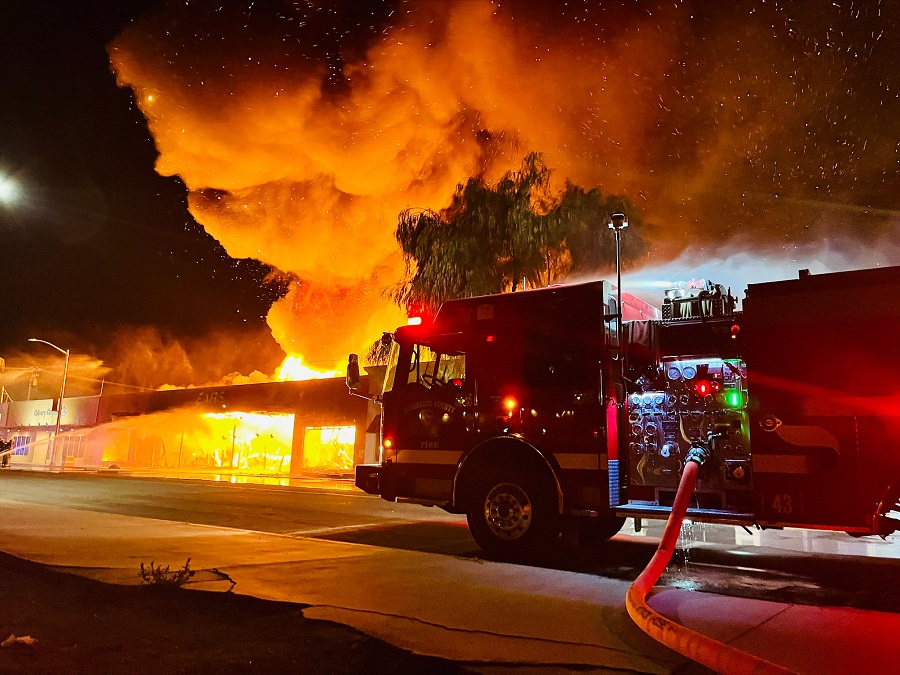
With its vast size and population, California requires a coordinated effort from multiple agencies to effectively respond to emergencies such as wildland and structure fires, floods, earthquakes, hazardous material spills, and medical aids. That is why the CAL FIRE Cooperative Fire Protection Program plays a crucial role in bringing state, federal, and local agencies together through contracts and agreements.
These agreements allow CAL FIRE to be the lead agency in providing fire, rescue, dispatch, and paramedic services to cities and towns in California that are not designated as state responsibility. This unified command relationship ensures that all resources are utilized to the fullest potential during emergencies, leading to greater success in response efforts. The CAL FIRE Cooperative Fire Protection Program staff are dedicated to coordinating these agreements and contracts, ensuring that emergency response in California is carried out smoothly and effectively.
Through its leadership in wildfire management across California’s diverse landscapes and complex fire environment, the California Department of Forestry and Fire Protection (CAL FIRE) builds and maintains collaborative relationships with international fire and emergency management organizations, academic institutions, and government partners. International collaboration strengthens CAL FIRE's ability to learn from global partners while sharing California's experience in addressing increasingly dynamic fire and emergency management challenges. These partnerships support the exchange of best practices, lessons learned, training opportunities, and technical expertise in areas ranging from wildfire prevention and suppression to community resilience and natural resource management.
CAL FIRE’s International Program serves as the primary point of contact for international affairs and oversees the Department’s international engagement efforts. This includes coordinating official international visits, facilitating technical exchanges, and developing and managing Memoranda of Understanding (MOUs) and other cooperative agreements.
INTERNATIONAL VISITOR REQUESTS
To ensure safe, secure, and productive visits, international visitors seeking meetings, tours, or other official engagements must submit their request to the CAL FIRE International Program at InternationalVisitRequests@fire.ca.gov no less than 30 days prior to the proposed visit. Please include the following information with your request:
• Point of contact
• Number of visitors
• Proposed dates of visit
• Purpose for visit
• Information about requesting agency
Please note that submission of this information does not guarantee approval of a visit request. Additionally, all international visitors will be required to complete the California State Threat Assessment Center’s Foreign National Screening Form at least 15 days prior to arrival.
Under what is known as the California Master Mutual Aid Agreement, CAL FIRE assists other fire departments within the State when local resources are depleted and Department resources are available, regardless of the type of disaster. In turn, CAL FIRE can access the local government fire departments through the same agreement for assistance in wildland fire suppression.
The Governor's Office of Emergency Services (OES) can also request CAL FIRE assistance with non-fire emergencies when the Governor has declared a State of Emergency. Such was the case during the Northridge earthquake of 1993, Napa earthquake of 2014, floods of 1997 and the Oroville Dam incident in 2017 when CAL FIRE provided flood-fighting crews and incident management and logistical support services.
When California is under siege with wildland fires across the state and resources are stretched thin, agreements with our local government cooperators through the California Fire Assistance Agreement (CFAA) and the California Military Department provide for California National Guard resources. The local government agencies provide personnel and equipment throughout the state and the National Guard provide Fire Crews, C-130 aircraft known as Modular Airborne Fire Fighting System (MAFFS), water dropping and medical rescue helicopters, support personnel, communications equipment, and other specialized resources.
The CAL FIRE Hand Crew Program operates CAL FIRE Firefighter Hand Crews and cooperates with the California Department of Corrections and Rehabilitation (CDCR), the California Conservation Corps (CCC), and the California Military Department (CMD) to staff hand crews in accordance with their respective master interagency agreements. CAL FIRE is currently authorized to operate 38 CAL FIRE Firefighter Crews, 75 Incarcerated Crews, 19 CCC Crews (including 4 Ventura Training Center Crews), and 14 CMD Crews. These crews are available to respond to all types of emergencies including wildfires, floods, search and rescue, and earthquakes. When not responding to emergencies, the crews engage in hazardous fuels reduction and prescribed fire project work to protect the community and resources of California.